Skip to Content

  • Follow us
    Click here to setup your social networks
  • Sign in
  • Home
  • How it Works
  • FAQ's
    • FAQ's
    • OBD2 Car List
  • Car Kits
    • Car Kit Overview
    • Car Kit Pricing
  • Heavy Vehicle Kits
    • Heavy Vehicle Overview
    • Heavy Vehicle Pricing
  • Media
    • Rockynats
    • Aussie Garage
    • Driving Enthusiast
    • Astill Design
  • About Us
  • Case Studies
    • Ford Ranger Towing
    • VW Amarok
Hydro Auto Tech
  • Contact Us
Hydro Auto Tech
      • Home
      • How it Works
      • FAQ's
        • FAQ's
        • OBD2 Car List
      • Car Kits
        • Car Kit Overview
        • Car Kit Pricing
      • Heavy Vehicle Kits
        • Heavy Vehicle Overview
        • Heavy Vehicle Pricing
      • Media
        • Rockynats
        • Aussie Garage
        • Driving Enthusiast
        • Astill Design
      • About Us
      • Case Studies
        • Ford Ranger Towing
        • VW Amarok

    • Follow us
      Click here to setup your social networks
    • Sign in
    • Contact Us

    How it Works

    Our PEM Hydrogen Generator Kit introduces a small, precisely controlled amount of hydrogen and oxygen gas (HHO) directly into your engine's air intake system. This revolutionary process ensures a more complete and efficient combustion of your vehicle's conventional fuel—be it diesel or gasoline—delivering substantial business advantages

    01

    On-Demand Hydrogen Generation (PEM Technology)

    Our system uses the highly efficient PEM (Proton Exchange Membrane) water electrolysis technology. This process electrolyzes pure water to instantly generate clean hydrogen and oxygen without the need for corrosive chemicals or additives. The system operates with low power consumption (4V 15A), in contrast to conventional hydrogen generators.


    02

    Optimized Combustion

    Hydrogen is an ideal combustion gas because its diffusivity is 12 times and its flame propagation speed is 8 times that of fuel. When a proper amount of hydrogen is introduced, it significantly improves the combustion efficiency of your fuel, especially during frequent starts, acceleration, and at low engine speeds (under 3000 RPM), where fuel consumption is typically maximized and combustion is insufficient.

    03

    Intelligent Microcomputer Control

    The core of our system is our independently developed Microcomputer, which features a high-precision, low-energy consumption 7 nanometer chip. It continuously reads real-time engine data and utilizes a high-precision background algorithm to dynamically adjust the engine's injection time, ignition timing, and transmission shift time based on driving habits and the amount of hydrogen gas. This ensures the trace hydrogen ignites at the most accurate time, maximizing the engine's thermal efficiency and fuel combustion efficiency.

    How Hydrogen Conversion Works


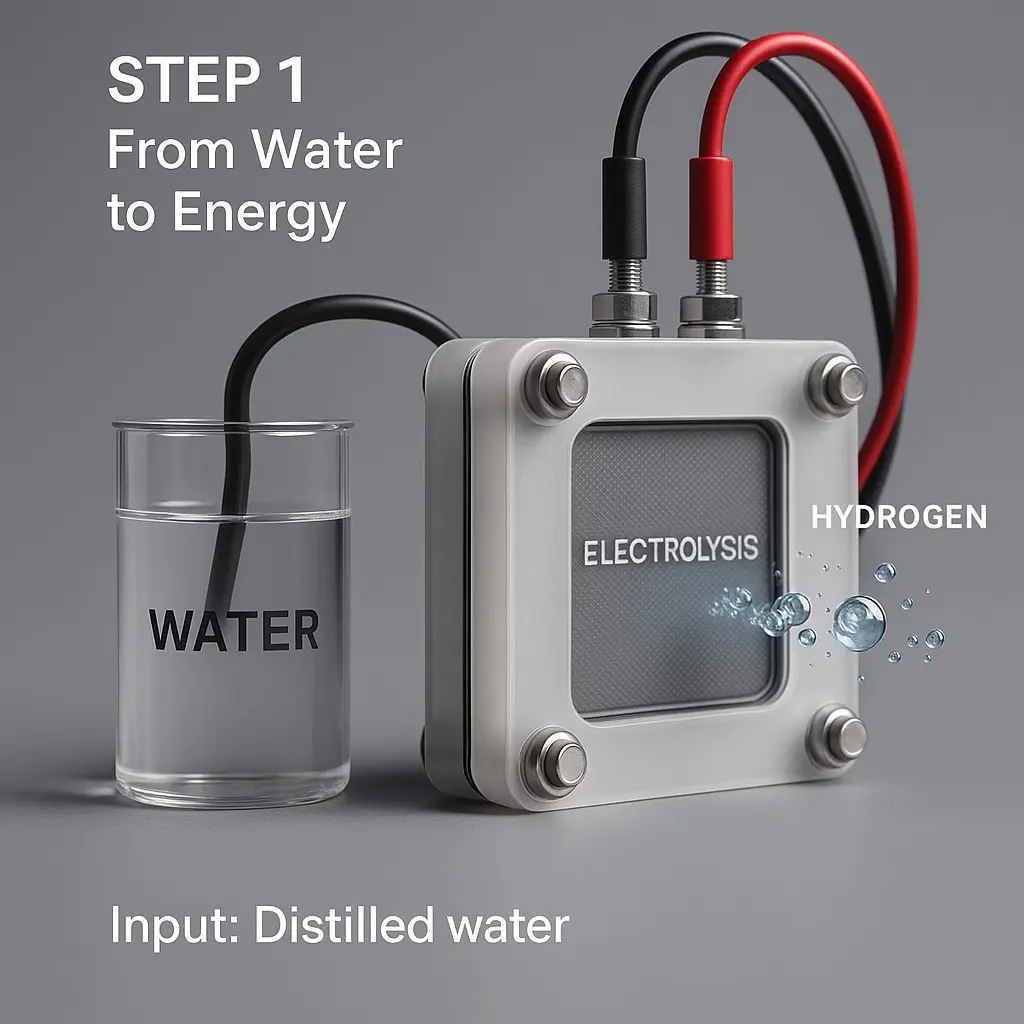
    Input: Pure water

    Inside the onboard reservoir, distilled water is supplied to a sealed electrolysis cell.

    The PEM electrolysis process splits the water (H₂O) into its pure components — hydrogen (H₂) and oxygen (O₂) — using controlled electrical current.

    Unlike older “HHO” or additive-based systems, PEM cells require no chemicals or electrolytes, making them clean, safe, and virtually maintenance-free.

    Technical Detail:

    • Operates at low voltage (12–24 V DC)

    • Produces high-purity hydrogen gas on demand

    • No storage — hydrogen is created only when the engine is running

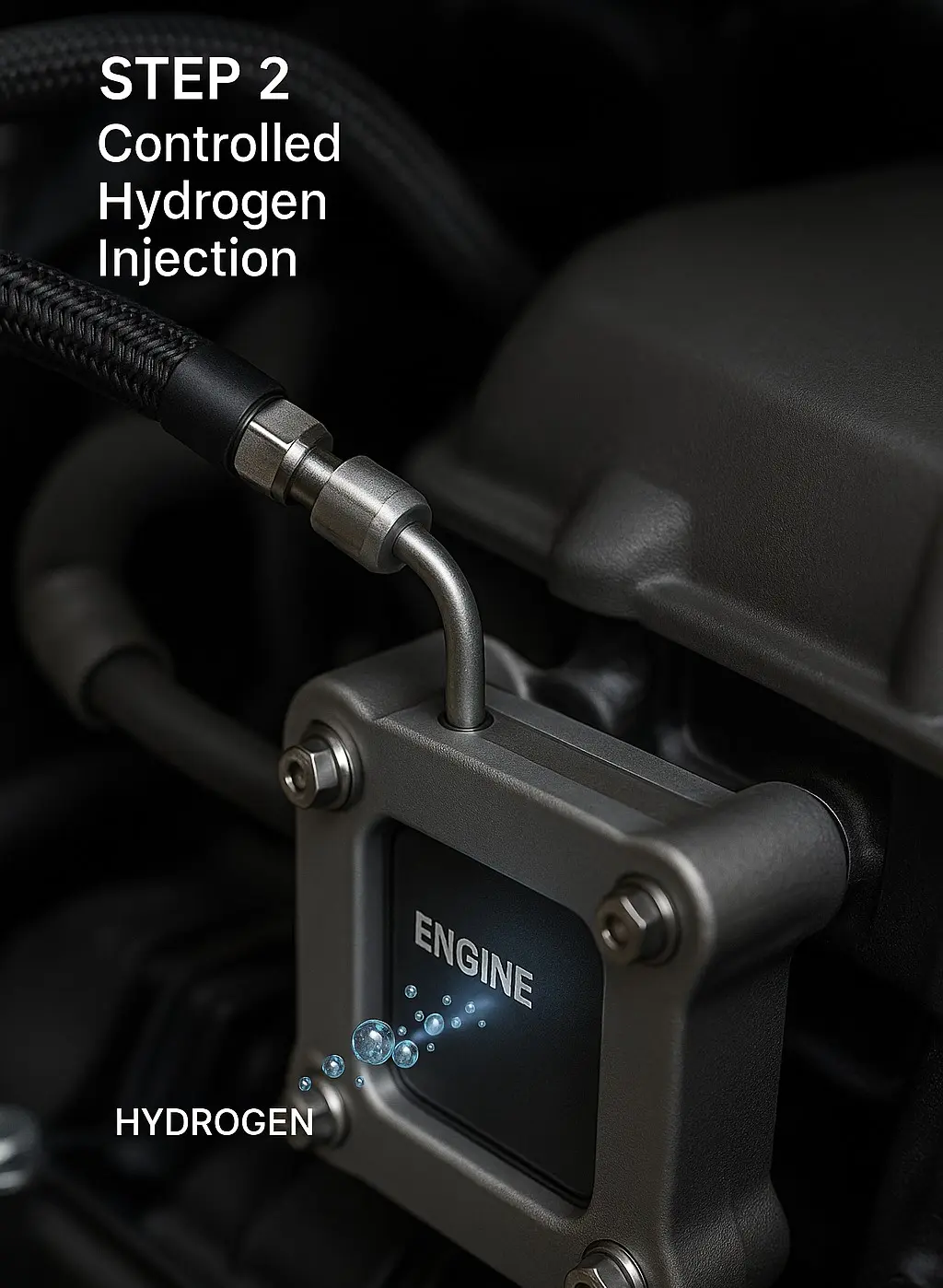
    The generated hydrogen is fed through a precision control unit and introduced into the air intake manifold of the engine.

    The small volume of hydrogen mixes with the incoming air–fuel mixture, acting as a combustion enhancer rather than a replacement for your fuel.

    What Happens:

    • Hydrogen raises the flame propagation speed

    • Fuel droplets burn more completely

    • Less unburned carbon exits the exhaust

    This process improves thermal efficiency and reduces fuel waste, resulting in noticeable gains in performance and mileage.

    Engine Benefits:

    ✅ Smoother throttle response

    ✅ Reduced engine knocking

    ✅ Cleaner spark plugs and valves

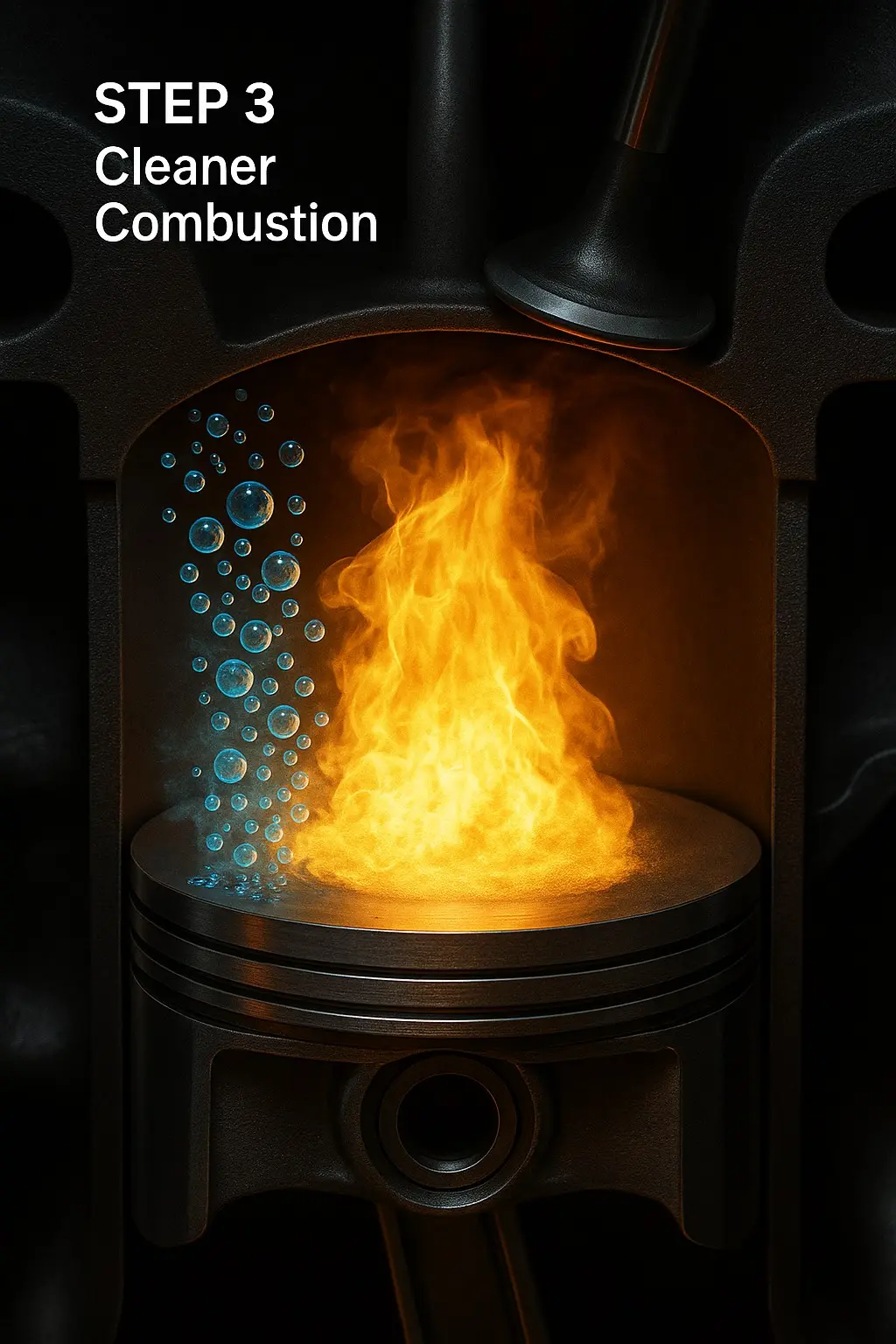
    During combustion, the enhanced air–fuel mix produces a hotter, more uniform flame, converting more of the fuel’s chemical energy into motion and less into waste heat or soot.

    As a result:

    • Fuel savings: Up to 20–25 % in typical road use

    • Lower emissions: Noticeable reduction in CO₂, NOx, and DPM (Diesel Particulate Matter)

    • Cleaner engine internals: Hydrogen helps remove existing carbon buildup

    • Extended maintenance intervals: Cleaner combustion means fewer oil and filter changes

    Environmental Impact:

    Hydrogen-assisted combustion directly reduces soot and particulate emissions, helping vehicles meet stricter Australian and Euro emission standards without costly engine overhauls.

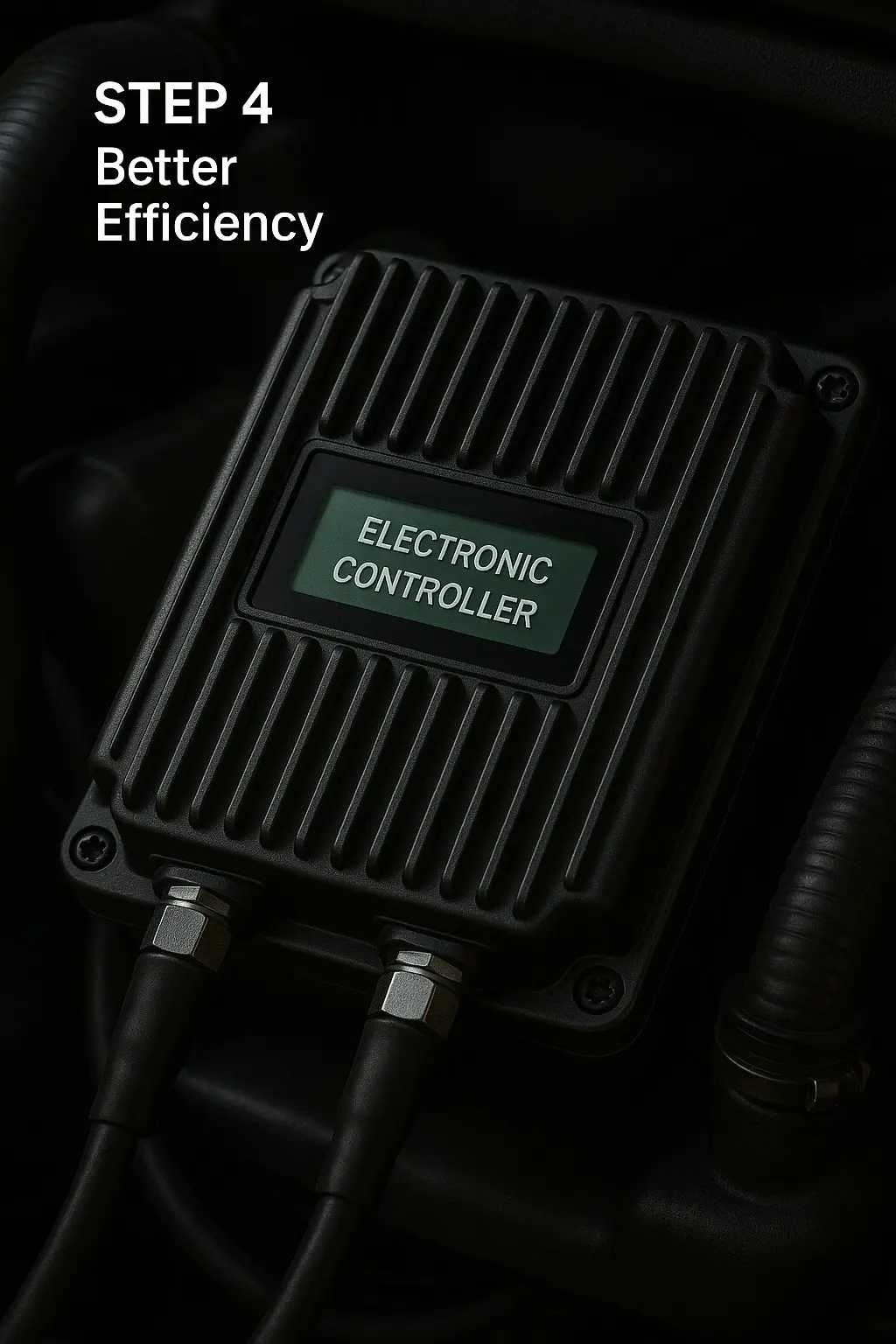
    Every Hydro Auto Tech system includes an electronic controller that synchronises hydrogen production with engine activity:

    • Starts producing hydrogen only when the engine is on

    • Automatically adjusts output based on RPM or throttle load

    • Monitors temperature, water level, and electrical current

    • Engages safety cut-offs for overheating or dry-cell conditions

    This ensures consistent, safe operation while maximising performance.

    Because the hydrogen is generated directly from water and electricity already available from the alternator, the process adds only a minimal load on the electrical system.

    Over time, the system pays for itself through reduced fuel consumption, lower emissions, and extended engine lifespan.

    Laws of Thermodynamics for PEM Car Kit

    Hydro Auto Tech use a Photon Exchange Membrane (PEM) pure water hydrogen generator for use in cars. This PEM hydrogen generator only requires 3.5V 10-15A electricity, consuming 40W of power, which is equal to a car’s light bulb, and can produce 300 ml/min of hydrogen and oxygen. There is no additional burden on the alternator. Additionally, a microchip program is used to correct engine parameters, adjust ignition timing, and shift timing, which can improve the engine’s fuel combustion efficiency under low working conditions.

    Sacrificing about 40W of energy to increase the combustion efficiency of the engine from about 10% to a combustion rate of 20%-40% at low operating conditions is worthwhile. This approach can also increase the fuel-saving rate by 15% and the power increase by 20%. Only pure water is added, with no chemical reagents required. There is no violation of the conservation of energy principle. However, after adding hydrogen, the combustion efficiency changes, and the energy generated at this time is different from the energy produced when no hydrogen is added.

    Read the Test Data from research conducted at an Engineering Facility 

    READ PDF

     Key Benefits of the Hydrogen Kits


    Reduced fuel expenses translate directly into lower operational costs and a better bottom line for your fleet or your everyday drive.

    Overcome common engine issues like slow speed-up or "roaring weakly" with a strong sense of frustration/hysteresis. Improves vehicle responsiveness for better on-road efficiency.

    Deeply removes existing carbon deposits and prevents new build-up by promoting full fuel combustion.

    Protect the environment and stay ahead of emissions regulations by effectively reducing the output of harmful exhaust substances.

    Eliminates gear shifts and setbacks for a superior, more efficient driving experience for commercial drivers.

    Non destructive addition to the vehicle., easy to install and configure.

    The Pain Points

    Fuel Flame Slow 

    The fuel flames in the engine
    slowly and the fuel cannot be completely burned at starting,
    accelerating and low rotation speed, resulting in fuel waste.


    Slow Acceleration 

    When accelerating, the engine
    roars weakly, has a strong
    sense of frustration and

    lags.

     Performance

    The fuel combustion in the engine is insufficient, which leads to the restriction of engine performance.

    All in One 

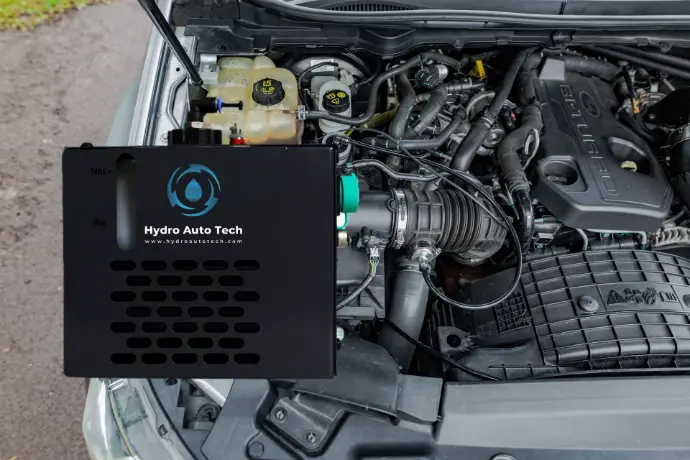
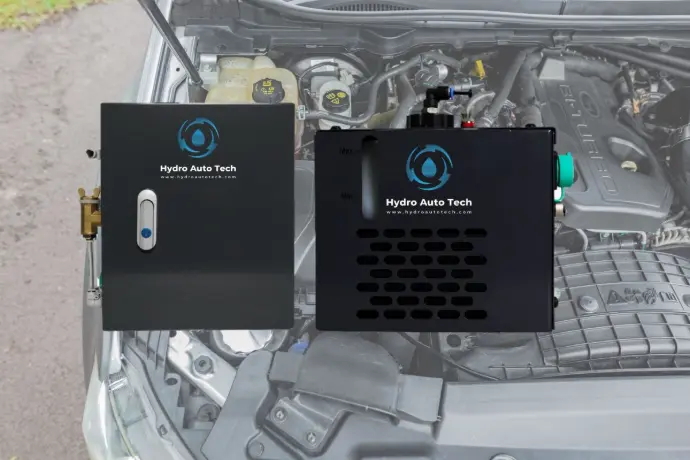
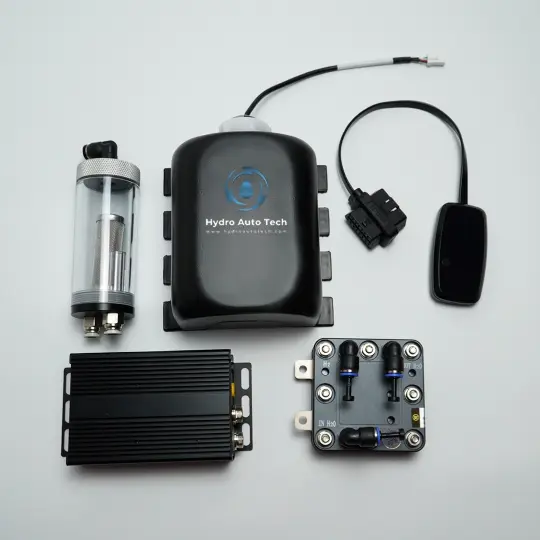
    This all-in-one solution is designed to be fitted inside your vehicles storage area (Boot/trunk).

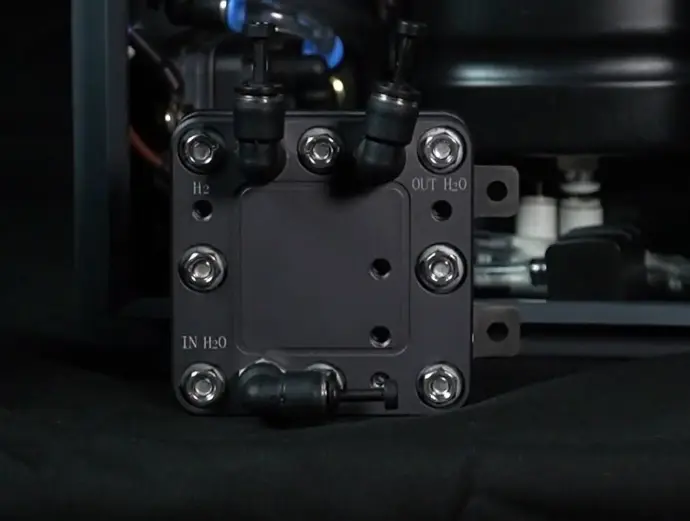
    PEM (Proton Exchange Membrane) HHO generators

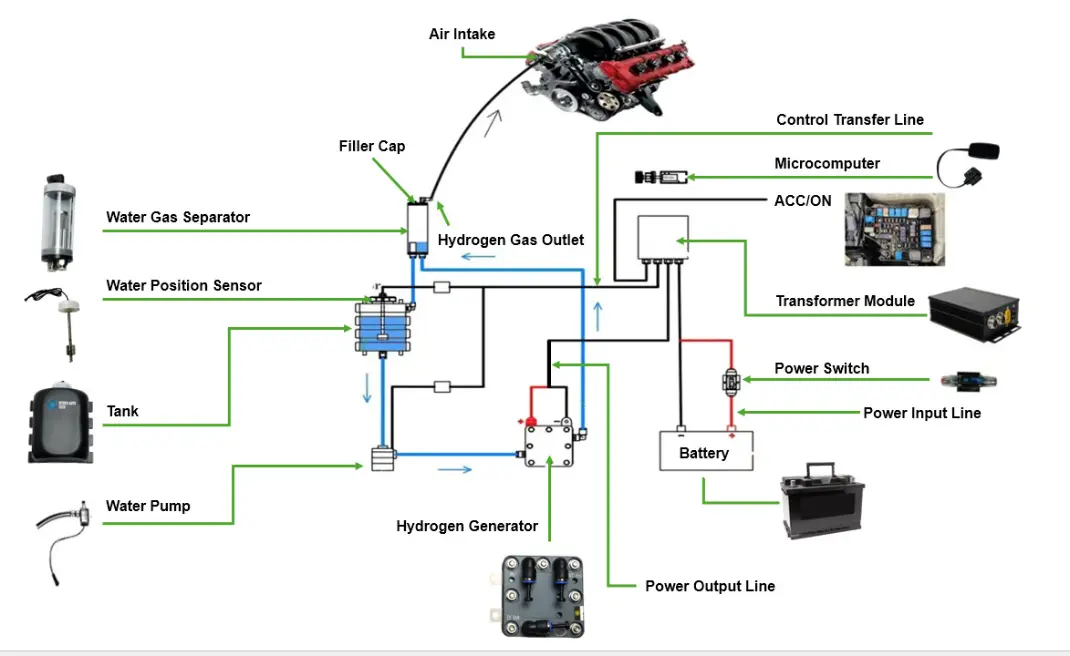
    How it's installed in your engine 

     
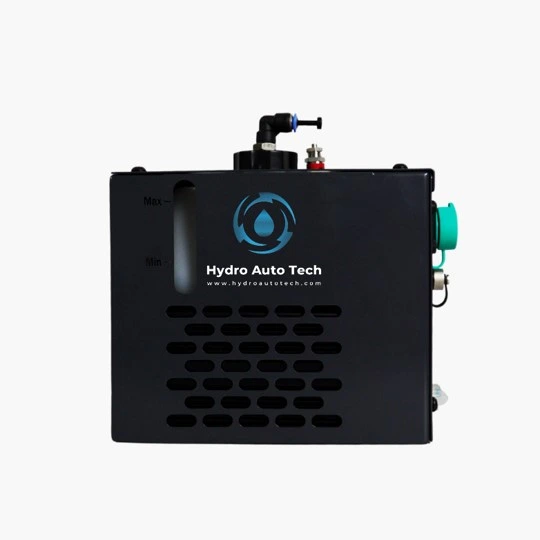
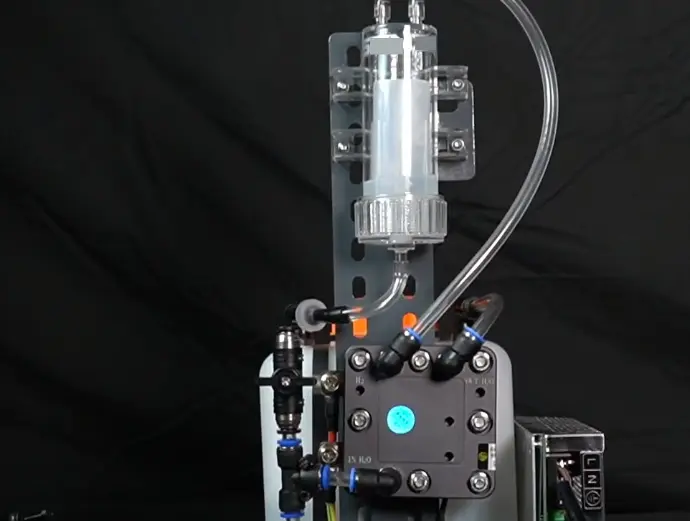
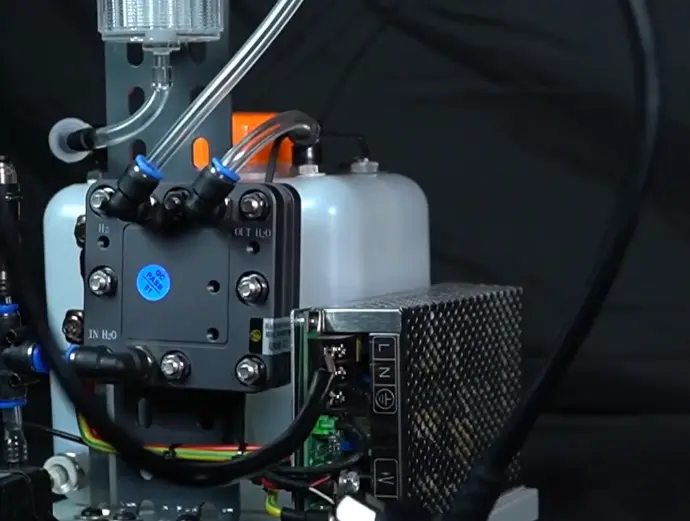
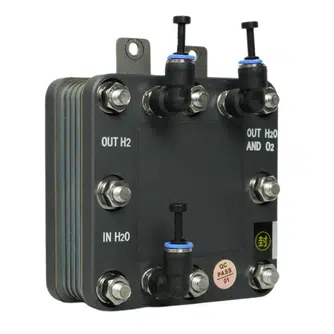
    Hydrogen GeneratorMicrocomputerTransformer ModelWater Tank and Water Position SensorWater Gas Separator

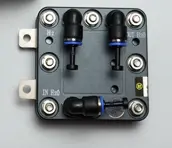
    Hydrogen Generator


    Electrolyze purified water to realize the function of low-power operation and generation of hydrogen and oxygen.


    Microcomputer


    Maximize the fuel efficiency of the engine.

    According to the driver's driving habits and the amount of hydrogen gas, timely adjustment are made for the engine ignition and transmission shift time.

    Adopts 7 nanometer chip imported from the United States, high precision, good performance, low energy consumption and fast speed.



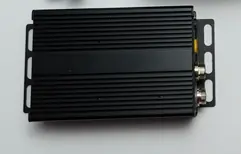
    Transformer Model


    Reduce the voltage of the automobile battery to 4V, output it to the resolver for use.

    Fireproof and high-temperature resistant material. The electronic components inside can withstand the high temperature of 105 ℃


    Water Tank and Water Position Sensor


    Storage tank for adding pure water and filter water vapour and sensor to measure the level of water.
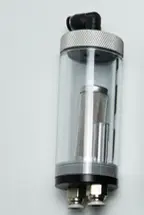


    Water Gas Separator


    Separate water vapor from gas and assists clean hydrogen to enter the engine air intake. 
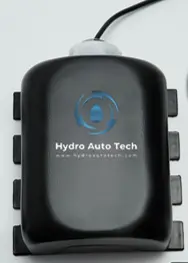
    COST SAVINGS

    Save money on fuel and Maintenance costs due to a cleaner burn

    REDUCED EMISSIONS

    Significant reduction in emissions due to using less fuel

    20%

    Fuel Saving (Approx)

    50%

    Emissions Reduction

    Top questions answered

    In this section, we answer some of your common questions.


    Our kits suit all vehicles makes and model as long as the on board computer allows for additional components.

    No, our hydrogen generator kits are not pressurized units therefore this modification does not required compliance plates.

    We all drive our vehicles differently and in some cases of city driving you might get slightly less fuel saving to highway driving, but overall, you will see improved fuel efficiency.


    For more FAQ's go here

    HHO vs PEM

    Proton Exchange Membrane (PEM)


    • Technology: Uses a solid polymer membrane as the electrolyte. It forces protons to pass through while physically separating the generated hydrogen and oxygen.
    • Efficiency & Purity: Highly efficient and produces extremely pure hydrogen (often 99.99%).
    • Fluids Used: Requires only pure distilled water; no harsh chemicals are needed.
    • Maintenance & Lifespan: Low maintenance, zero corrosive byproducts, and a long operational lifespan.  beans.

    HHO (Oxyhydrogen)


    • Technology: Typically refers to alkaline "wet cell" or "dry cell" electrolyzers. They do not use a solid membrane, meaning the hydrogen and oxygen mix together into a single gas stream known as oxyhydrogen.
    • Efficiency & Purity: Lower electrolysis efficiency and higher energy consumption compared to PEM. 
    • Fluids Used: Requires water mixed with a liquid electrolyte, such as potassium hydroxide (KOH).
    • Maintenance & Lifespan: Higher maintenance. The KOH solution can cause corrosive mist, which, when burned or inhaled, can degrade engine components or system piping over time if not properly filtered.
    Navigation
    • Home
    • Car Kits
    • Heavy Vehicle Kits
    • About Us
    •  
    Policies
    • Privacy Policy
    Get in touch
    • Contact Us

    Brisbane, Queensland Australia 


    Social Media


    Power from water, Hydrogen Generators for cars and heavy vehicles

     Privacy Policy Cookies
    Copyright © Hydro Auto Tech Pty Ltd
    Powered by Odoo

    We use cookies to provide you a better user experience on this website, not for marketing purposes. Cookie Policy

    Only essentials I agree